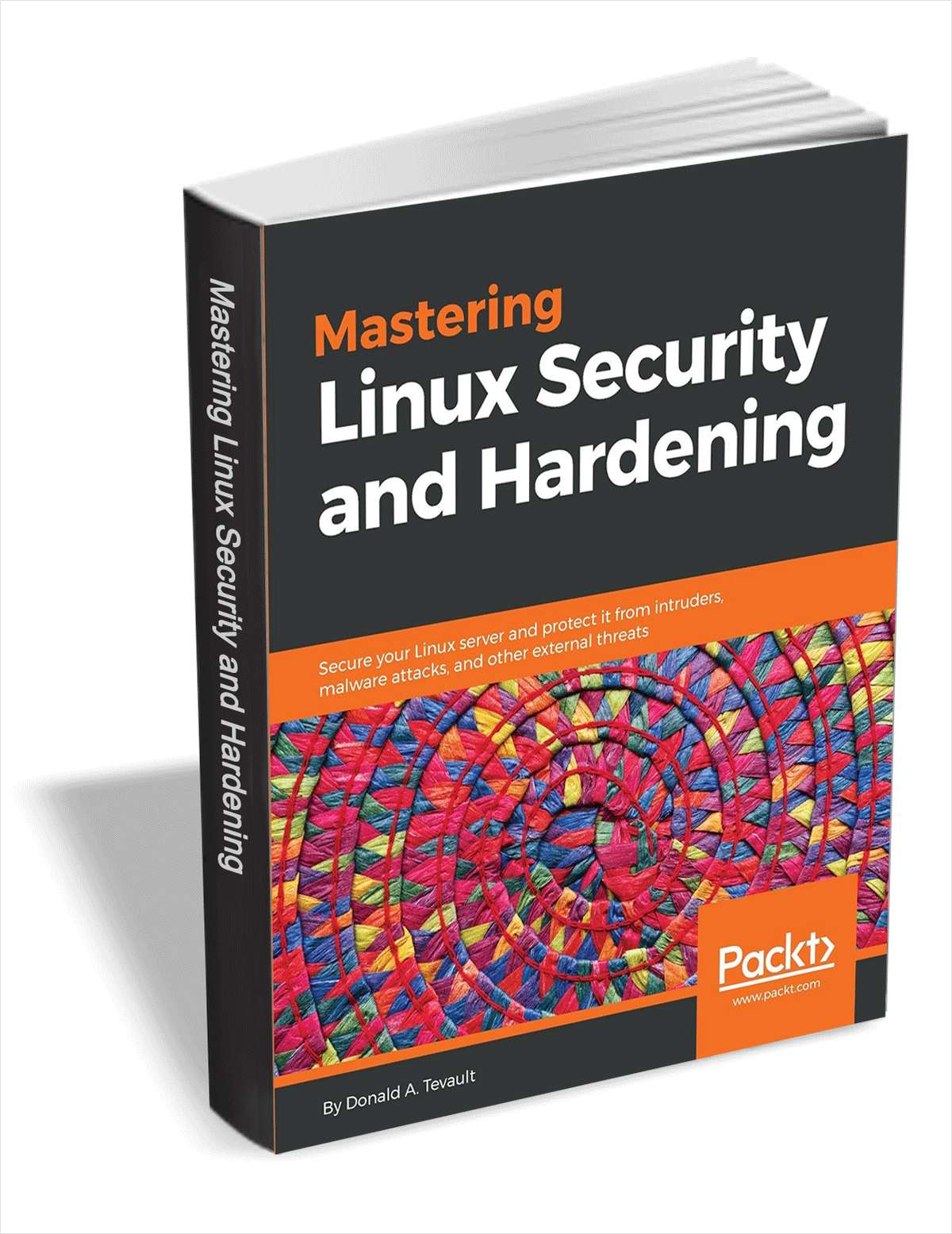
What Does Mastering Linux Security and Hardening Do?
This technical guide provides a systematic approach to hardening Linux environments against security breaches. The resource focuses on practical techniques to prevent unauthorized access to sensitive data and identify potential system compromises. Users will learn to implement defensive measures that obstruct external attackers from planting malware and utilize specific detection methods to identify whether a system has already been infected.
The eBook also addresses internal security protocols, detailing how to restrict authorized personnel from accessing data beyond their specific permissions. For network management, the text outlines procedures for auditing active network services, allowing administrators to perform quick checks and disable unnecessary processes that may expand the system's attack surface.
Coverage includes security techniques universal to all major Linux distributions, alongside configurations specific to certain environments. Key learning objectives include:
- Protecting sensitive data from external intruders.
- Deploying malware prevention and detection tools.
- Managing internal user permissions to prevent data leaks.
- Auditing and disabling redundant network services.
- Applying both general and distro-specific security hardening.
By following the methodologies outlined in this guide, administrators will be equipped to deploy systems with significantly higher resistance to common exploits and advanced persistent threats.
Top 5 Reasons To Download Mastering Linux Security and Hardening
If you are running a Linux system today, you are likely doing so because you value stability, performance, and a certain level of inherent security. However, there is a dangerous myth circulating in the tech community that Linux is "unhackable" out of the box. This couldn't be further from the truth. To truly protect your assets, you need a professional-grade hardening strategy. This giveaway provides exactly that. Here are the top five reasons why you need to download this comprehensive guide to Linux security immediately:
- Complete Data Fortification: Learn how to use advanced techniques to prevent unauthorized access to your most sensitive files and databases.
- Proactive Malware Defense and Detection: Move beyond basic antivirus and learn how to stop malware from being planted and how to sniff out hidden threats already in your system.
- Neutralizing the Insider Threat: Secure your environment against authorized users who may attempt to access data they shouldn't see, ensuring strict departmental and user isolation.
- Aggressive Network Service Auditing: Discover how to perform rapid, surgical checks on your network services to close unnecessary ports and eliminate the "low-hanging fruit" that hackers love.
- Cross-Distro Mastery: Gain security skills that are applicable across the entire Linux landscape, from Debian and Ubuntu to RHEL and CentOS, while also mastering distro-specific nuances.
1. Complete Data Fortification
In the modern digital landscape, data is the most valuable currency. Whether you are a hobbyist running a home media server, a developer protecting intellectual property, or a system administrator managing a fleet of enterprise servers, your data is under constant threat. This eBook isn't just a surface-level overview; it is a deep dive into the art of making your data invisible and inaccessible to those who don't have the right to see it.
Most users rely on basic password protection, but as any seasoned tech reviewer will tell you, passwords are the weakest link in the security chain. This guide teaches you the comprehensive approach. It covers the implementation of advanced file permissions and Access Control Lists (ACLs) that go far beyond the standard "read-write-execute" bits. You will learn how to structure your file system so that even if a specific application is compromised, the attacker remains trapped in a sandbox, unable to touch your sensitive configuration files or personal databases.
Furthermore, the guide explores the nuances of encryption at rest. If someone were to physically steal your hardware or gain access to your cloud storage snapshots, would they be able to read your files? If the answer is anything other than a resounding "no," you need this download. By mastering the techniques outlined in this book, you are building a multi-layered defense-in-depth strategy that ensures your data remains encrypted, isolated, and protected against even the most persistent intruders.
2. Proactive Malware Defense and Detection
There is a common misconception that malware is a "Windows problem." While it’s true that Linux handles permissions differently, the rise of sophisticated ransomware, rootkits, and cryptojackers specifically targeting Linux servers has skyrocketed. This eBook is a game-changer because it stops treating Linux security as a passive activity and turns it into a proactive hunt.
First, the guide walks you through the preventative measures. How do you stop a malicious script from executing in a temporary directory? How do you ensure that only signed, verified binaries are running on your kernel? These are the questions that top-tier security professionals ask, and this book provides the answers. You will learn how to harden the kernel itself, closing the gaps that malware typically exploits to gain root privileges.
But prevention is only half the battle. A true pro knows that detection is just as critical. This giveaway details how to use integrity checking tools to monitor your system files. If an attacker manages to swap out a legitimate system command for a malicious one, you will know instantly. The book teaches you how to analyze logs and system behavior to detect the "footprints" of malware that traditional scanners might miss. It turns you from a passive observer into a digital forensic expert, capable of identifying anomalies before they turn into a full-blown catastrophe.
3. Neutralizing the Insider Threat
When we think of "hackers," we often imagine a shadowy figure in a remote location. But statistics show that a significant portion of security breaches come from the inside. This doesn't always mean a disgruntled employee with malicious intent; often, it is a well-meaning user who accidentally executes a command they shouldn't have or accesses a folder containing sensitive payroll or customer data.
This eBook addresses the "human element" of Linux security with surgical precision. It teaches you how to implement the Principle of Least Privilege (PoLP). You will learn how to configure your system so that every user and every process has exactly the amount of access required to perform its job—and not a shred more. This limits the "blast radius" of any potential mistake or malicious action.
The guide dives deep into the configuration of sudo policies, user groups, and environment variables to ensure that horizontal movement within the system is virtually impossible. For anyone managing a multi-user environment, this section alone is worth its weight in gold. By the time you finish these chapters, you will have the confidence to hand out user accounts knowing that your core system architecture remains locked down tight. You are essentially building a digital vault where every room requires its own specific key.
4. Aggressive Network Service Auditing
Every network service you run is a potential doorway into your system. Web servers, SSH, database listeners, and even printer services are all listening for connections, and every single one of them could have a vulnerability. One of the most common ways systems get compromised is through "service creep"—where a system is running background tasks and network services that the user isn't even aware of.
This eBook teaches you how to be an auditor of your own machine. It provides a toolkit of quick checks and commands to see exactly what is running and which ports are open to the world. But it goes beyond just looking at a list of numbers. It teaches you the philosophy of a lean system. If a service doesn't need to be running, it shouldn't just be stopped; it should be disabled or removed entirely.
You will learn how to use essential tools like netstat, ss, and nmap from a defensive perspective to map out your "attack surface." Once you know what's exposed, the book guides you through the process of hardening those specific services. Whether it’s changing default ports, implementing rate-limiting, or setting up robust firewalls using iptables or nftables, this guide ensures that your Linux box is as invisible as possible to external scans. It’s about making your system a "hard target"—something so difficult to penetrate that attackers simply move on to a weaker victim.
5. Cross-Distro Mastery
One of the most frustrating aspects of learning Linux is the fragmentation. A guide written specifically for Ubuntu might not work for someone running Fedora or Arch. This is where this giveaway truly shines. It is written with a "universal first" mindset, focusing on the core security principles that apply to the Linux kernel and the GNU toolchain across the board.
However, the author also understands that the "how-to" can change depending on your package manager or init system. That is why this book carefully balances universal security concepts with distro-specific implementation. Whether you are working with the apt ecosystem, the yum/dnf world, or something more specialized, you won't be left in the dark. This makes the knowledge you gain from this book incredibly portable. You aren't just learning how to secure a single computer; you are learning a professional skill set that you can take to any job or any project.
The guide covers the nuances of different security modules like SELinux (common in the RHEL world) and AppArmor (common in the Debian/Ubuntu world). Understanding these systems is often the barrier between an amateur and a professional Linux administrator. This book breaks down these complex topics into digestible, actionable steps. By the end of this eBook, you won't just be "following instructions"; you will understand the underlying architecture of Linux security, allowing you to adapt to new distributions and new threats as they emerge in the future.
Why You Can't Afford to Miss This Giveaway
In the world of technology, we often talk about "must-have" apps or gadgets. But security isn't just a "nice-to-have" feature; it is the foundation of everything you do online. We are currently living through an era of unprecedented cybercrime. From massive data breaches that expose millions of records to targeted attacks on personal infrastructure, the stakes have never been higher. This eBook is your shield.
As a tech reviewer, I see hundreds of guides and "how-to" manuals every year. Most of them are fluff—rehashed blog posts that offer nothing more than what a quick search would provide. This giveaway is different. It is a comprehensive guide that takes a holistic view of the Linux ecosystem. It acknowledges that security is not a one-time setup, but a continuous process of hardening, auditing, and refining.
The beauty of this specific book is that it scales with your needs. If you're a beginner, the sections on network services and malware detection will provide immediate, tangible improvements to your security posture. If you're an advanced user, the deep dives into kernel hardening and insider threat mitigation will provide the "pro-tips" you need to take your systems to the next level. It bridges the gap between basic "common sense" security and enterprise-grade system hardening.
Furthermore, the "cost" of not knowing this information is potentially catastrophic. A single compromised server can lead to identity theft, financial loss, or the loss of years of hard work. When you consider that this guide is being offered as a giveaway, the value proposition is off the charts. You are getting professional-level training that would normally cost hundreds of dollars in certification courses, all packed into a readable, actionable eBook format.
The art of preventing your Linux system from getting compromised is about being one step ahead of the people trying to get in. It’s about building a fortress where others have only built a fence. It’s about the peace of mind that comes from knowing that your data, your users, and your network are protected by the best practices in the industry. Don't wait until you see a suspicious login attempt in your logs. Don't wait until your files are encrypted by ransomware. Take control of your security today.
This is a rare opportunity to get a high-quality, professional resource for free. Whether you want to master the command line for personal use or you're looking to bolster your resume with high-demand cybersecurity skills, this book is the perfect starting point. The techniques you will learn—from detecting malware to auditing network services—are the exact same techniques used by SysAdmins at some of the world's largest tech companies. Download this giveaway, put in the time to learn the material, and transform your Linux system into an impenetrable stronghold. You won't regret it.
Final Verdict: This eBook is an essential addition to any tech enthusiast's digital library. It is practical, detailed, and incredibly relevant to today's threat environment. If you use Linux, you need this guide. Period.

Reviews for Mastering Linux Security and Hardening
Click Here to Read Reviews for Mastering Linux Security and Hardening >> Click Here to Submit Reviews for Mastering Linux Security and Hardening >>