What Does PDF OCR Do?
PDF OCR is a desktop utility designed to convert scanned PDF documents and paper-based imagery into editable electronic text. Utilizing Optical Character Recognition technology, the software extracts content from non-searchable files, allowing users to modify or repurpose document data. The application supports a wide range of document standards, including A4, A3, B3, B4, and B5 page sizes.
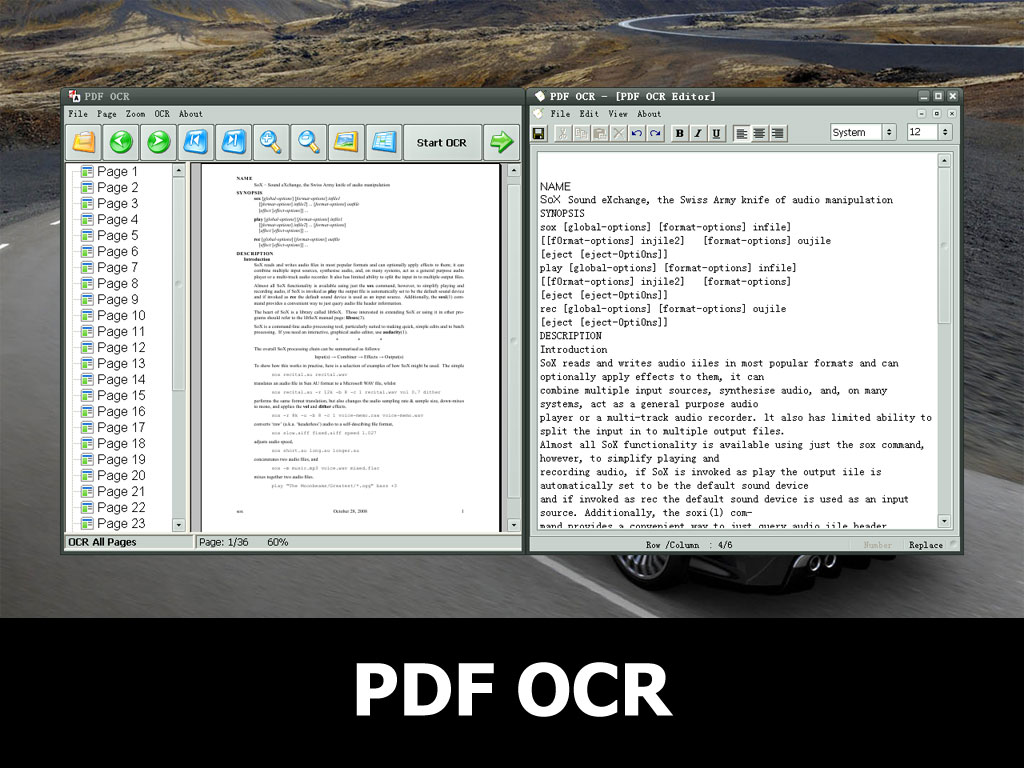
The software features three distinct processing modes: single page, specific page range, and full batch conversion. This batch functionality enables the processing of entire documents simultaneously to improve workflow efficiency. According to technical specifications, the engine can process upwards of 10 pages in approximately 45 seconds. Beyond simple extraction, PDF OCR includes a built-in text editor, which allows for immediate modification of the OCR results without the need for external word processing software.
Additional capabilities include a Scanned Image to PDF Converter, which facilitates the creation of digitized PDF books from raw image files. The system supports over 10 languages, including English, German, French, Spanish, and Italian. The user interface is optimized for speed, requiring only three clicks to initiate the conversion process from a scanned PDF to a text file. This tool provides a streamlined solution for digitizing legacy archives and managing paperless documentation.
Top 5 Reasons To Download PDF OCR
If you have ever found yourself staring at a scanned PDF document, desperately wishing you could highlight a sentence, copy a paragraph, or fix a glaring typo, then you already know the frustration of "flat" digital files. We live in a world that is supposedly paperless, yet we are constantly bombarded with scanned images of text that act more like locked vaults than usable data. This is where PDF OCR enters the frame. As a tech reviewer who has tested dozens of document management tools, I can tell you that finding a utility that balances power, speed, and simplicity is rare. This giveaway provides a professional-grade solution to one of the most persistent headaches in the modern office. Before we dive into the nitty-gritty of why this software is a must-have for your digital toolkit, here are the top five reasons you need to download PDF OCR today.
- Advanced Multilingual OCR Extraction: Convert scanned PDFs into fully editable text across more than 10 different languages with high precision.
- Blazing Fast Batch Processing: Process over 10 pages in less than 45 seconds and handle entire books at once using the comprehensive batch mode.
- Integrated "No-Word-Needed" Text Editor: Edit your OCR results immediately within the software without needing to export to Microsoft Word or external editors.
- Bi-Directional Image-to-PDF Conversion: Not only can you extract text, but you can also create your own professional scanned PDF books from raw image files.
- Minimalist, Three-Click Workflow: A streamlined user interface that allows you to go from a locked scanned file to editable text in just three clicks.
1. Advanced Multilingual OCR Extraction
The core of any Optical Character Recognition (OCR) software is its engine. If the engine cannot distinguish an "8" from a "B" or a "0" from an "O," the software is essentially useless, leaving you with more work to do in corrections than if you had just re-typed the document yourself. PDF OCR utilizes a highly sophisticated OCR technology specifically tuned for scanned paper books and documents. It doesn't just "see" shapes; it understands the structure of characters, ensuring that the transition from a physical scan to an electronic text file is as seamless as possible.
What truly sets this tool apart for the global professional is its extensive language support. In our interconnected economy, we rarely deal exclusively in English. Whether you are a researcher looking at German technical manuals, a legal professional reviewing French contracts, or a student analyzing Spanish literature, PDF OCR has you covered. By supporting 10+ languages—including German, French, Spanish, and Italian—the software breaks down the barriers that often stop other OCR tools in their tracks. This versatility ensures that your international documents are treated with the same level of accuracy as your local ones.
Think about the hours saved. Instead of manually translating or re-typing foreign language documents, you can feed them into PDF OCR and receive editable text in seconds. This isn't just about convenience; it is about data integrity. When you use a high-quality OCR engine, you reduce the risk of human error that comes with manual data entry. For anyone dealing with high volumes of scanned archives, this feature alone makes the software an indispensable asset.
2. Blazing Fast Batch Processing Performance
In the tech world, efficiency is king. Nobody has time to sit and watch a progress bar crawl across the screen for twenty minutes while a single document is processed. One of the most impressive benchmarks of PDF OCR is its sheer velocity. The developers have optimized the engine to process 10+ pages in just 45 seconds. When you compare that to the time it would take to manually transcribe even half a page, the value proposition becomes crystal clear.
However, speed is nothing without the ability to handle scale. This is where the Batch Mode functionality shines. Many entry-level OCR tools force you to upload and process documents one page at a time, which is a nightmare for anyone trying to digitize an entire book or a lengthy legal brief. PDF OCR offers three distinct modes to fit your specific needs: Single Page, Page Range, and All Page OCR. If you only need a specific quote from page 45 of a manual, you can target it. If you need to digitize a 300-page manifesto, you can set the software to Batch Mode and let it handle the entire file in one go.
This "set it and forget it" capability is a game-changer for productivity. You can initiate a batch process, grab a cup of coffee, and return to find a fully editable text file waiting for you. This makes it a perfect tool for librarians, administrative assistants, and researchers who are tasked with "onboarding" physical archives into a digital database. The software handles the heavy lifting, allowing you to focus on the actual analysis of the content rather than the mechanics of the conversion.
3. Integrated "No-Word-Needed" Text Editor
One of the most common "pain points" in the OCR workflow is the constant jumping between different applications. Usually, you have to run the OCR, save a text file, open Microsoft Word, import the file, and then finally start editing. PDF OCR eliminates this friction by including a build-in text editor directly within the interface. This is a feature that demonstrates the developers truly understand the end-user's needs.
Once the OCR process is complete, the results appear immediately in the internal editor. This allows you to perform "on-the-spot" verification and editing. If there is a smudge on the original paper scan that caused a minor character error, you can fix it right there in the app. You don't need to have an expensive Microsoft Office subscription or wait for a heavy application like Word or WordPad to load. The editor is lightweight, responsive, and purpose-built for the task at hand.
This integrated approach also helps maintain focus. By staying within a single environment, you reduce the cognitive load of multitasking. It turns a multi-step process into a single, cohesive workflow. For those who value a clean desktop and a streamlined set of tools, this built-in editor is a standout feature. It provides the essential formatting and editing tools you need to clean up your text before you export it for its final use. It is about simplicity and self-sufficiency—two hallmarks of great software design.
4. Versatile Image-to-PDF Creation Suite
While the primary draw of this software is its ability to turn PDFs into text, it also possesses a powerful "reverse" capability that shouldn't be overlooked. PDF OCR includes a Scanned Image To PDF Converter. This means the software isn't just a tool for extraction; it is also a tool for creation. If you have a folder full of JPEG or PNG scans of a book or a series of invoices, you can use this software to compile them into a single, professional, and standardized PDF document.
What makes this particularly impressive is the software's support for all page sizes. Whether your source material is standard A4, the larger A3, or even specialized formats like B3, B4, and B5, PDF OCR handles the layout without breaking a sweat. This is crucial for users who work with technical drawings, architectural blueprints, or vintage books that don't adhere to modern standard printing sizes. You can create your own scanned PDF books that are perfectly formatted and ready for archiving.
This dual functionality makes the software a complete "lifecycle" tool for documents. You can take raw images, turn them into a PDF, and then turn that PDF into editable text. This level of versatility ensures that the software remains useful across a wide variety of projects. Whether you are archiving old family recipes, digitizing corporate records, or creating an E-book from a physical manuscript, the ability to manage the image-to-PDF pipeline is an invaluable bonus that you won't find in many dedicated OCR tools.
5. Minimalist, Three-Click Workflow
We have all downloaded software that felt like it required a PhD to operate. Complex menus, hidden settings, and confusing terminology can turn a simple task into a frustrating ordeal. The beauty of PDF OCR lies in its extreme ease of use. The developers have distilled the conversion process down to a "3-click" philosophy. This isn't just marketing speak; it is a design principle that makes the tool accessible to everyone, regardless of their technical expertise.
When you open the application, the path forward is clear. There is no guesswork involved. You select your file, choose your settings, and hit the convert button. This user-centric design is particularly beneficial for those who only need to use OCR occasionally. You won't have to spend twenty minutes re-learning the software every time you open it. It is a "utility" in the truest sense of the word—like a hammer or a screwdriver, it is there to do a specific job, and it does it without unnecessary flourish or complication.
In a world of "bloatware" where apps try to be everything to everyone, PDF OCR's focus on a fast, easy, and effective user experience is refreshing. It respects the user's time. By reducing the number of clicks required to achieve a result, the software allows you to stay in your "flow state." Whether you are a student rushing to finish a paper or a professional handling a mountain of paperwork, the simplicity of PDF OCR ensures that the software is a help, not a hindrance. This accessibility, combined with its powerful features, is the final reason why this giveaway is something you cannot afford to pass up.
Conclusion: In summary, PDF OCR is a robust, lightning-fast, and incredibly user-friendly tool that solves the "locked document" problem once and for all. With its ability to handle multiple languages, its impressive batch processing speeds, and the convenience of a built-in editor, it stands head and shoulders over many of its competitors. The added bonus of being able to create PDFs from images and its support for all page sizes makes it a versatile powerhouse. If you deal with digital documents in any capacity, this is the giveaway you have been waiting for. Download it, install it, and watch your productivity soar as you finally take control of your scanned documents.

Reviews for PDF OCR
Click Here to Read Reviews for PDF OCR >> Click Here to Submit Reviews for PDF OCR >>