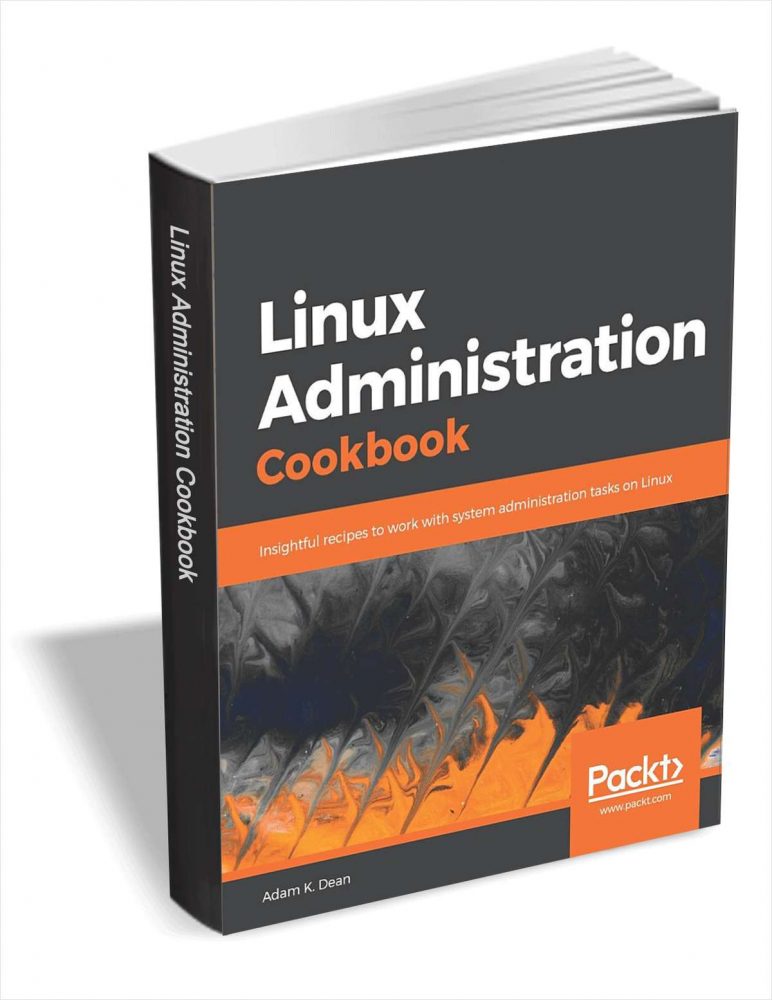
What Does Linux Administration Cookbook Do?
The Linux Administration Cookbook is a technical resource designed to bridge the gap between basic Linux usage and professional system administration. Given the operating system's dominance in server environments and modern application development, this guide provides a structured approach to managing diverse hardware and cloud-based instances.
This resource focuses on practical "recipes" for handling common administrative tasks. Users can expect to learn how to troubleshoot day-to-day issues across a variety of platforms, including:
- Configuring and managing Raspberry Pi devices.
- Overseeing virtual machines within cloud environments such as Azure.
- Maintaining local office servers and network hardware.
Beyond simple commands, the book covers system installation, configuration strategies, and the fundamental mechanics of GNU/Linux. The author draws on professional experience as a data center hardware engineer and DevOps consultant to provide context for common errors and operational challenges. For those tasked with maintaining server uptime or managing modern development stacks, the guide offers a foundational toolkit for navigating the Linux ecosystem. It serves as a manual for identifying why systems fail and how to optimize their performance in real-world scenarios.
Top 5 Reasons To Download Linux Administration Cookbook
If you have spent any amount of time in the world of technology, you know that Linux is the invisible engine driving the modern world. Whether you are a budding developer, a seasoned IT professional, or a hobbyist tinkering with a smart home setup, understanding Linux is no longer optional—it is essential. Today, we are looking at a resource that simplifies this complex ecosystem: the Linux Administration Cookbook. This isn't just another dry manual; it is a practical, recipe-based guide designed to turn you from a confused observer into a confident system administrator.
Before we dive into the nitty-gritty of why this specific resource is a game-changer for your career and your hobby projects, let’s look at the core benefits. Here are the top five reasons why you need to download this giveaway right now:
- Practical, Recipe-Based Learning: Instead of drowning in theory, you get actionable "recipes" that solve real-world problems immediately.
- Versatility Across Hardware: The guide covers everything from the tiny Raspberry Pi under your TV to massive enterprise virtual machines in the Azure cloud.
- Expert Real-World Insights: You benefit from the author’s years of experience in data centers and DevOps, learning from his mistakes so you don't have to make them.
- Foundational Mastery: It builds a solid "bedrock" of knowledge, explaining the why behind GNU/Linux so you can adapt to any distribution.
- Comprehensive Troubleshooting Skills: You will finally understand those "mysterious" blinking LEDs and server errors, giving you the power to fix systems when they break.
1. Practical, Recipe-Based Learning
We have all been there: you open a technical manual hoping to find a quick fix for a server issue, only to find three chapters on the history of operating system kernels written in 1991. While theory has its place, the Linux Administration Cookbook understands that when you are sitting in front of a terminal, you need results. This is the primary reason this giveaway is so valuable. It utilizes a "recipe" format, which is the gold standard for modern technical learning.
Think of it like a kitchen cookbook. If you want to make a soufflé, you don't necessarily need to know the molecular biology of an egg; you need to know the temperature of the oven and the timing of the whisk. This book applies that exact logic to system administration. Whether you need to configure a firewall, set up a web server, or manage user permissions, you can jump straight to the relevant recipe. Each entry provides the specific commands you need to type, the expected output, and a clear explanation of what those commands are actually doing.
This approach is perfect for the way we work today. In a fast-paced DevOps environment or even a busy home lab, time is the most precious commodity. By having a library of proven recipes at your fingertips, you reduce the time spent "Googling" for answers and increase the time spent actually building and optimizing your systems. It transforms the learning process from a chore into a series of small, satisfying victories.
2. Versatility Across Hardware
One of the most intimidating things about Linux is its sheer ubiquity. It isn't just on desktop computers; it’s everywhere. One of the standout features of this giveaway is that it doesn't pigeonhole you into one specific type of Linux use case. It recognizes the modern reality that a system administrator might be managing a Raspberry Pi controlling a home security system one hour, and a high-performance virtual machine in Microsoft Azure the next.
For the hobbyist, this book is a godsend for demystifying that "circuit-board-like thing" under the TV. We’ve all seen the Raspberry Pi projects that look amazing in a YouTube video but become a nightmare when you try to configure the networking or the storage. This guide walks you through those specific "low-power" scenarios, ensuring your home projects are stable and secure. It takes the mystery out of the hardware, explaining how the Linux kernel interacts with physical components.
On the flip side, if you are looking to advance your professional career, the book’s focus on cloud environments like Azure is vital. The modern "server" isn't usually a physical box in a room anymore; it’s a virtual instance living in a massive data center. Understanding how to administer Linux in a virtualized, cloud-native environment is a high-income skill. By covering the spectrum from the smallest hardware to the largest cloud infrastructures, this book ensures that your skills are portable and relevant, no matter where your career takes you.
3. Expert Real-World Insights
There is a massive difference between a book written by an academic and a book written by someone who has been in the "trenches" of a data center at 3:00 AM when a primary server fails. The Linux Administration Cookbook falls firmly into the latter category. The author brings a wealth of experience as a data center hardware engineer, systems administrator, and DevOps consultant. This is perhaps the most underrated reason to download this giveaway.
Throughout the book, the author regales you with errors and anecdotes. This might sound like "filler," but in the world of IT, these stories are pure gold. Hearing about a specific configuration error that took down a network—and how it was fixed—provides a level of context that a standard "How-To" guide simply cannot match. You aren't just learning how to type commands; you are learning how to think like a professional engineer.
These anecdotes help humanize the technology. They remind us that even the experts make mistakes and that "mysterious" problems usually have logical (if sometimes hidden) solutions. By learning from the author’s "war stories," you gain a predictive edge. You start to recognize the warning signs of a system under stress before it crashes. You learn the "unwritten rules" of the data center, such as why certain backup strategies fail or how to handle legacy systems that no one else wants to touch. This mentorship-style writing is what makes this book a true "career-fast-track" resource.
4. Foundational Mastery
While the recipes provide immediate solutions, the ultimate goal of any great tech resource should be to empower the user to solve future problems on their own. This is where the concept of the "bedrock" comes in. Linux is famous (or infamous) for having hundreds of different versions, known as "distributions" or "distros." If you only learn how to use Ubuntu, you might feel lost when you encounter Red Hat or CentOS. This book solves that problem by focusing on the fundamentals of how GNU/Linux works at its core.
By downloading this giveaway, you are investing in a foundational understanding of the system. You will learn about the filesystem hierarchy, how the kernel manages memory, how processes interact with each other, and how the shell interprets your commands. This is the "Why" behind the "How." Once you understand these core principles, the specific "flavor" of Linux you are using becomes secondary. You will have the confidence to log into any terminal and find your way around.
This foundational knowledge is what separates a "script kiddie" from a true administrator. Instead of just copy-pasting commands from the internet, you will understand what each flag and parameter is doing. This level of mastery is essential for anyone wanting to move into DevOps or Site Reliability Engineering (SRE). It gives you the "bedrock" necessary to keep learning and evolving as the Linux landscape changes over the next decade. In an industry where tools and frameworks change every six months, foundational Linux knowledge is one of the few things that remains constant.
5. Comprehensive Troubleshooting Skills
Let's be honest: the main reason most people start looking for a Linux book is because something isn't working. Maybe it’s that "strange little server" in the corner that stopped responding, or perhaps it’s a virtual machine that is "languishing" and consuming way too many resources. Troubleshooting is the core of system administration, and this book treats it like the art form it is.
The Linux Administration Cookbook excels at teaching you how to diagnose problems. It takes those "mysterious" blinking LEDs and explains exactly what the hardware is trying to tell you. It teaches you how to read log files—the "black box" of any Linux system—to find the "smoking gun" of a system failure. You will learn how to use diagnostic tools to monitor CPU usage, memory leaks, and network bottlenecks.
There is a specific kind of professional satisfaction that comes from fixing a "broken" system. When everyone else is panicking because the server is down, the person who knows how to use the Linux command line to identify and kill a runaway process is the hero of the hour. This giveaway provides you with the "tools and knowledge" to be that hero. It transforms troubleshooting from a stressful "trial-and-error" process into a methodical, scientific investigation. You won't just be guessing what's wrong; you will be knowing what's wrong and knowing exactly which recipe to use to fix it.
In conclusion, if you have ever felt intimidated by the command line or confused by the inner workings of your servers, the Linux Administration Cookbook is the perfect remedy. It bridges the gap between high-level theory and low-level hardware, all while providing the practical "recipes" you need to get the job done today. Whether you are managing a Raspberry Pi, a home office server, or an enterprise cloud environment, the insights within this book will serve as your guide. Don't let this giveaway pass you by—download it, start with the first recipe, and begin your journey toward Linux mastery. Your future self (and your servers) will thank you.
The world of system administration is waiting for you. It is a world of logic, efficiency, and immense power. With the right guide in your hand, you can master the mysterious virtual machines, tame the blinking LEDs, and become the expert that others turn to when things go wrong. This is more than just a book download; it is an upgrade for your technical life. Grab your copy and start cooking up some Linux solutions today!

Reviews for Linux Administration Cookbook
Click Here to Read Reviews for Linux Administration Cookbook >> Click Here to Submit Reviews for Linux Administration Cookbook >>